Shipping Goods to Europe: Key Points to Consider
Whether you ship to Europe regularly or for the first time, this checklist brings together the main points to consider — from planning and paperwork to packaging and delivery details.
Europe is one of the most important markets for manufacturers and exporters in Türkiye. The Customs Union and well-developed road links make the process easier, but a smooth shipment still depends on good preparation. Below is a checklist of the key points to consider when shipping goods to Europe.
1. Describe your product and its tariff code correctly
Every product has a customs tariff code (the HS code internationally, the Combined Nomenclature code in the EU). This code determines the duties that apply, the documents required and any restrictions. A clear product description and the correct code are the foundation for every step that follows.
2. Agree on the delivery terms
Decide with your buyer from the start which Incoterms rule you will work with. Who handles transport, insurance and customs formalities depends on that rule. Read our guide to Incoterms for more detail.
3. Prepare the documents in advance
The commercial invoice, packing list, transport document (a CMR for road transport), any movement certificates such as an A.TR or EUR.1, and product-specific certificates should all be ready before the cargo is. We explain what each of these documents is for in our guide to customs documents.
4. Assess the Customs Union and taxes correctly
The Customs Union between Türkiye and the European Union allows industrial goods to benefit from a customs duty advantage with an A.TR movement certificate. Some product groups, such as agricultural products, follow different rules. Keep in mind that, in addition to customs duties, import VAT and other product-specific taxes may apply in the country of destination.
5. Confirm your consignee's customs details
Businesses involved in customs activities in the EU need an EORI number. Confirming your consignee's EORI number, full company name and address up front helps prevent delays at customs on arrival.
6. Check product compliance and labelling
Products placed on the EU market must comply with the relevant EU legislation. Certain product groups require CE marking and a declaration of conformity, for example, and there are additional rules in areas such as chemicals, food products and toys. It is also worth checking that the labels on the product and its packaging meet the language and information requirements of the destination country.
7. Pay attention to packaging and palletisation
- Pack your cargo to withstand a long journey and more than one round of handling.
- Use standard-size pallets where possible; the most common size in Europe is the 120 × 80 cm Euro pallet.
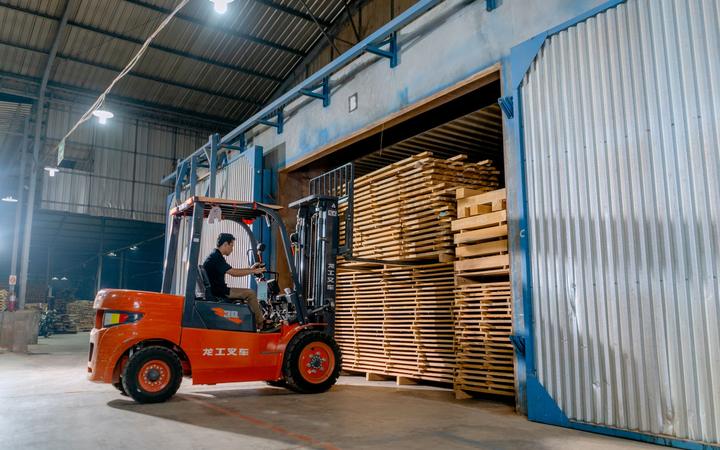
- Make sure wooden packaging and pallets are treated and marked in line with the international ISPM 15 standard.
- State whether the pallets can be stacked, and label the cartons clearly.
8. Choose a transport option that matches the volume
If your cargo doesn't fill a vehicle, a part load may suit you best; if it does, or has special requirements, a full truckload may be the better choice. We compare the two in this article.
9. Don't overlook insurance
In international road transport, the carrier's liability is limited to the legal limits set by the CMR Convention and may not always cover the actual value of the cargo. It is therefore advisable to take out cargo insurance that reflects the value of the goods, and to check the scope of cover in advance.
10. Keep track of carbon regulations
The European Union's Carbon Border Adjustment Mechanism (CBAM) places reporting and financial obligations on EU importers of certain product groups, such as iron and steel, aluminium, cement, fertilisers, electricity and hydrogen. If you ship goods in these groups, it is important to follow the current obligations together with your buyer.
11. Provide complete delivery information
Share the delivery address, contact person and details, receiving hours, unloading facilities such as a loading dock or forklift, and whether a delivery appointment is needed. Complete information helps the delivery succeed at the first attempt.
Frequently asked questions
Is an A.TR required for every shipment to Europe?
No. The A.TR is used for industrial goods covered by the Customs Union. Some products need a different movement certificate, such as a EUR.1, and others may not use any preferential document at all. The right document depends on the product.
I'm shipping to Europe for the first time — where should I start?
Start by confirming your product's tariff code and the delivery terms you will use with your buyer. Once you share the dimensions, weight and delivery details of your cargo, our team will plan the rest of the process with you.
This article is for general information only. Regulations and practices vary by country and product and may change over time; contact our team for advice specific to your shipment.